The Myth of the Perfect First Paddle Stroke
The perfect first paddle stroke is a myth. Learn how relaxed repetition and noticing your boat’s response can build steadier, more useful confidence.
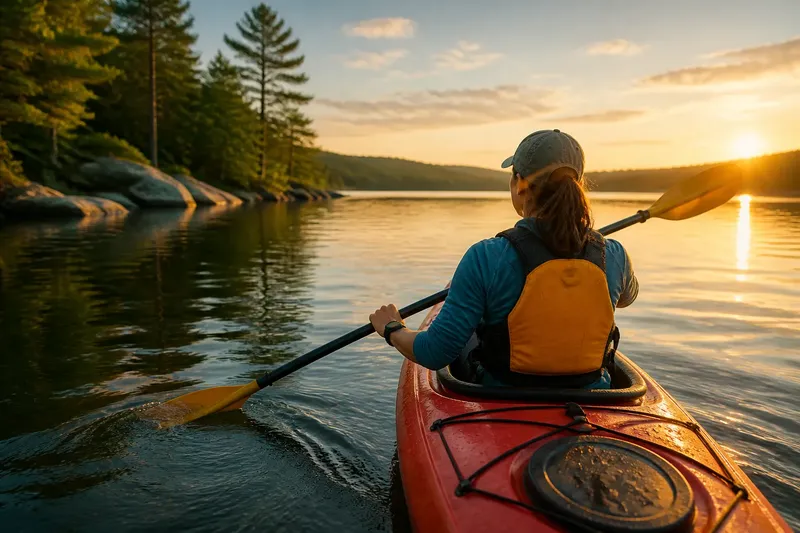
Does your first paddle stroke need to be technically perfect before you can feel confident? No. The perfect first paddle stroke is a myth: on a real outing, familiarity grows as you repeat a comfortable movement and notice how your boat responds. The useful goal is not to copy a flawless shape, but to make small, relaxed adjustments while staying aware of your surroundings.
Start with a stroke you can repeat
A new paddler may try to hold the paddle exactly as an instructor demonstrated, then tense up over every detail: hand position, blade angle, torso movement, and where the boat is pointing. Paying attention is useful, but trying to control everything at once can turn a simple stroke into a test.
Instead, begin with a manageable movement. Sit comfortably, hold the paddle with a loose but secure grip, and use an easy forward stroke on calm water where you have room. Let the blade enter near your feet, pull it back without straining, and lift it out around your hip. The movement does not have to look polished to provide useful information.
Comfort matters because a stroke you can repeat gently gives you more chances to learn what it does. If your shoulders tighten or you start holding your breath, ease off. A short pause is more useful than forcing another hard pull.
Notice what the boat does after each pull
Your paddle is only part of the feedback. After a stroke, notice whether the boat glides, turns slightly, or barely changes direction. Feel whether the hull remains settled or rocks under you. These observations help connect an action with a response without demanding that every stroke produce the same result.
Water, wind, boat shape, and your own position all affect what happens. The same movement can feel different as conditions shift. That does not mean you have failed to find the one correct stroke; it means the boat is responding to several influences at once.
Try leaving a brief pause between easy strokes. During that glide, look ahead and feel the boat’s direction rather than immediately correcting every small wobble. You will start to distinguish a harmless change from a turn that needs attention.
Use small changes to learn, not to chase perfection
When the boat drifts off your intended line, adjust one thing at a time. You might make the next stroke a little shorter, place the blade closer to the hull, or switch sides. If you change several details together, it becomes harder to tell which adjustment affected the boat.
Say you are paddling a calm, open pond and notice that your kayak gradually arcs to one side. You pause, check that you are sitting evenly, and make a few gentle strokes on the opposite side. If the boat begins to hold its direction more comfortably, you have learned something useful about its response. You have not discovered a universal formula; you have found an adjustment that suits that moment.
Keep your experiments modest and make them only where you have room and a clear view. Do not turn practice into a contest to correct every drift. Some variation is ordinary, and repeated, forceful strokes can create more strain than control.
Let comfort guide the pace
Confidence often begins with knowing that you can pause. If you feel rushed, take a moment to let the paddle rest across the boat, breathe normally, and check your balance. That pause gives you a chance to notice whether you are tired, tense, or simply concentrating too hard.
Short practice periods can be more helpful than paddling until your arms feel spent. Switch sides when it feels natural, and stop to rest before discomfort changes your grip or posture. A relaxed paddler can pay attention to direction and surroundings; a strained paddler may focus only on getting through the next pull.
For an outing with other people, agree on a simple way to pause or regroup before heading out. That makes it easier to slow down when someone needs a break, without treating a pause as a sign that anyone is doing poorly.
Practice where the water leaves room to learn
Choose a calm, sheltered place with space to turn and stop, such as a quiet area away from boat traffic. Give yourself time to get used to the paddle and boat before adding a destination or trying to keep pace with someone else. Familiarity is easier to build when your attention is not split between learning a movement and handling a demanding setting.
Wear a properly fitted personal flotation device and keep your practice within conditions and areas suited to your experience. If you are unsure about equipment, weather, local access, or what to do if conditions change, ask a qualified paddling instructor or local boating authority before setting out. A brief lesson can also help you check basic technique without turning practice into a search for a perfect pose.
What is not worth the effort? Replaying a single stroke in your head until you can no longer enjoy the water. Remember one useful cue, such as “loosen my grip” or “notice the glide,” then return your attention to the boat and your surroundings.
What do new paddlers ask about the first stroke?
How should a beginner hold a kayak paddle?
Use a grip that feels secure without squeezing hard, and keep your hands in a comfortable position that lets your wrists stay relaxed. Paddle designs differ, so check the maker’s instructions or ask an instructor to confirm the fit.
Why does my kayak turn when I paddle forward?
A forward stroke can make a boat turn slightly, and wind, current, hull shape, and uneven effort can influence the direction. Notice the pattern over several gentle strokes before making a small adjustment.
Should I practice on both sides?
Yes, switching sides helps you become familiar with how the boat responds to each side and can reduce the habit of relying on only one. Keep the pace easy, and take a break if your posture or grip starts to feel strained.
When should a beginner ask for instruction?
Ask for help if you are unsure how to use your equipment, stay within suitable conditions, or respond to a change in the water. An instructor can also offer specific feedback while keeping the focus on comfort and control rather than a supposedly perfect stroke.
Build confidence from what you can feel
The perfect first paddle stroke is not a threshold you have to cross before an outing becomes enjoyable. Begin with a repeatable movement, notice the boat’s response, and make modest adjustments when they serve a clear purpose. Over time, that attention can make paddling feel more familiar, even though no two strokes or stretches of water are exactly alike.
For your next calm practice, choose one cue and carry it for a few strokes. It might be a lighter grip or a pause to feel the glide. Then let the cue go and look ahead. Confidence can grow from those ordinary moments of noticing, not from getting every movement right.