A Windy Evening at Camp: Arrange the Space Before Settling In
A windy evening camp layout keeps useful items close, separates cooking from resting, and makes it easier to settle in without chasing loose gear.
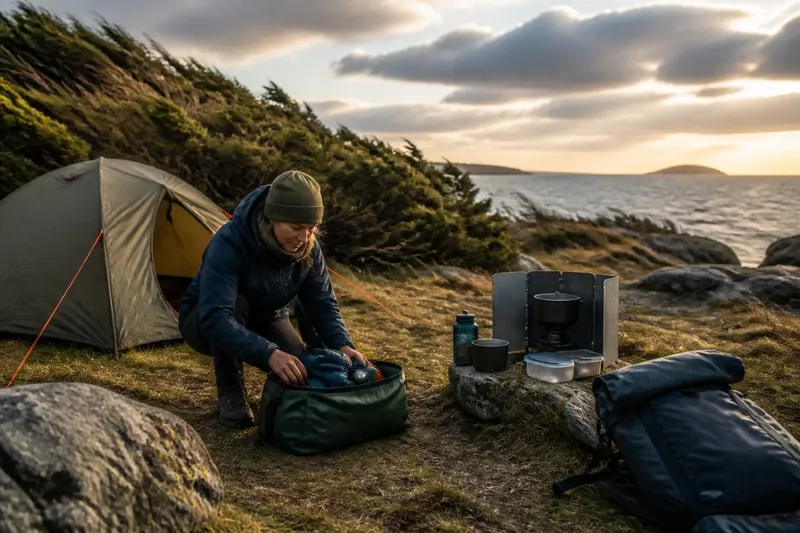
Where should everything go when you reach camp and the breeze keeps tugging at jackets and tent fabric? A windy evening camp layout works best when it follows your next few needs: get sheltered, sort food and water, then make a comfortable place to rest. Start by noticing where the wind is coming from and how the ground, vegetation, and existing campsite shape the space.
Choose a layout that follows the evening
Think of camp as a small set of destinations rather than a pile of gear. You need somewhere to enter and leave your shelter, a spot for cooking and food-related tasks, and a place to sit or change layers. Keep the route between them clear enough that you can move without stepping over bags or searching under bedding.
Before unloading everything, pause with your pack still on. Look for a natural windbreak such as a sturdy hedge or a rise in the terrain, but avoid blocking access or choosing a spot that could collect runoff. Notice loose leaves, grit, and hanging branches, too. The goal is not to defeat the wind; it is to arrange ordinary tasks so a gust is less likely to scatter small belongings.
Put the shelter first when the breeze is rising
If the wind is strengthening or daylight is fading, make the shelter area your first priority. Keep the shelter’s entrance easy to reach and leave a clear path to it. Set the pack and bulky gear in a place where they will not obstruct the entrance or become a tripping hazard. Small items can wait in a zipped pocket or closed bag until you need them.
Use the sheltered side of a natural feature for sorting clothing and bedding, provided the ground is suitable and the spot is not under loose limbs. A closed stuff sack or dry bag can hold the items you will want first, such as a warm layer, headlamp, and sleeping gear. Put that container where you can reach it from the sitting area without crossing the cooking space.
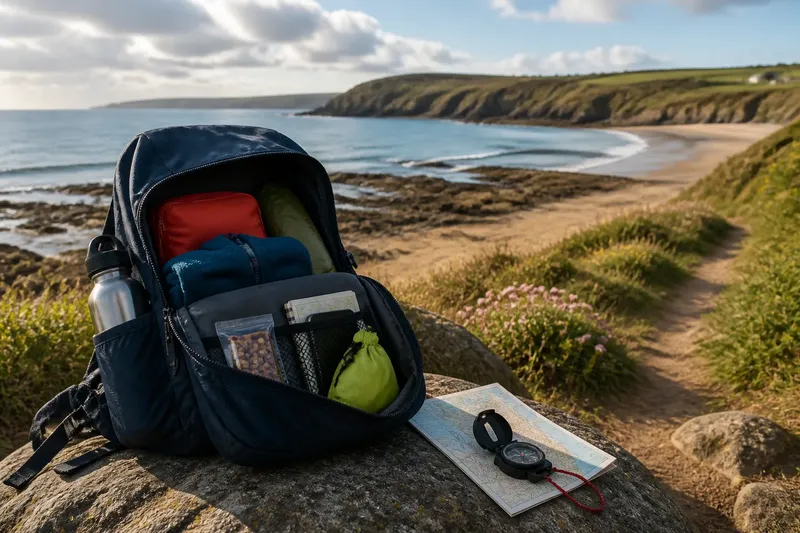
Say you arrive at a familiar campsite as the breeze picks up and your pack contains a jacket, a headlamp, and a loose map. You could put the jacket and headlamp together in a closed bag beside the shelter entrance, then tuck the map into a zipped pocket. The expected result is that the items needed for settling in stay together while the paper and smaller gear are less exposed to gusts.
Keep cooking apart from the place you rest
When you have room, make food preparation a distinct station rather than a task spread across your sitting area. Put ingredients, utensils, and water together in a container or on a stable surface, and keep them separate from sleeping gear and spare clothing. This makes it easier to finish one routine and clear the space before settling down.
Choose a cooking location only where it is permitted and appropriate for your equipment and conditions. Follow the stove maker’s directions and site rules; do not use a stove inside a tent or in another enclosed space. Avoid improvising with wind screens or placing cooking equipment where a gust, uneven ground, or nearby material could create a hazard. If the conditions do not suit safe cooking, use a suitable alternative or postpone the task.
After food preparation, put away ingredients and utensils rather than leaving them scattered. Store food in the manner required by the campsite and local wildlife guidance. Keep the path from the cooking station to the shelter free of containers and cords, especially if you may walk it after dark.
Let your available space decide the arrangement
If the site is open and exposed, favor fewer loose objects and more closed containers. Keep frequently used items in a bag with a secure closure, and avoid spreading clothing or wrappers on the ground. If no natural windbreak is suitable, use the layout to reduce handling: gather what belongs to each task before beginning it, then put it away when finished.
If the site has a sheltered corner, use it for quiet tasks such as changing layers or organizing bedding, while keeping the entrance and walking route clear. A windbreak can make a spot more comfortable, but it should not become a cramped nook where you cannot move easily or reach your gear.
If the ground is uneven or crowded, prioritize stable footing and a clean route over creating separate stations. Keep the cooking area and resting area distinct as far as the site allows, but do not force an arrangement that puts gear on a slope or blocks an exit. A compact layout with a few closed bags is often easier to manage than a spread of items.
It is not worth chasing every drifting leaf or trying to make the campsite look perfectly ordered. Focus on the items you will handle in the dark, the path you will walk, and anything that should stay clean and dry.
What should stay within reach on a windy evening?
Which items should I keep near the shelter?
Keep the next layer, headlamp, and sleep gear easy to reach, preferably grouped in a closed bag. That way, you can settle in without opening every pocket or leaving belongings exposed.
Where should I put small loose items?
Use zipped pockets, a lidded container, or a securely closed pouch instead of setting small objects on the ground. Choose one consistent place for items such as a lighter or utensils so they are easier to locate.
Should the cooking area be beside the tent?
Do not assume that the space beside a tent is suitable for cooking. Choose a permitted location that follows the equipment instructions and campsite rules, and keep cooking separate from sleeping gear.
What if the wind shifts after I settle in?
Recheck whether loose items are contained and whether your walking route is still clear. If conditions make a task uncomfortable or unsafe, pause and adjust the routine rather than trying to preserve the original layout.
Make one final pass before settling down
Once the shelter, food station, and resting spot are arranged, walk the route you expect to use after dark. Move anything that could catch a foot, close containers, and check that the items you need next are in their assigned place. A thoughtful windy evening camp layout is not elaborate: it gives each task a home and leaves you room to move when the breeze changes.